
Book Appointment Now

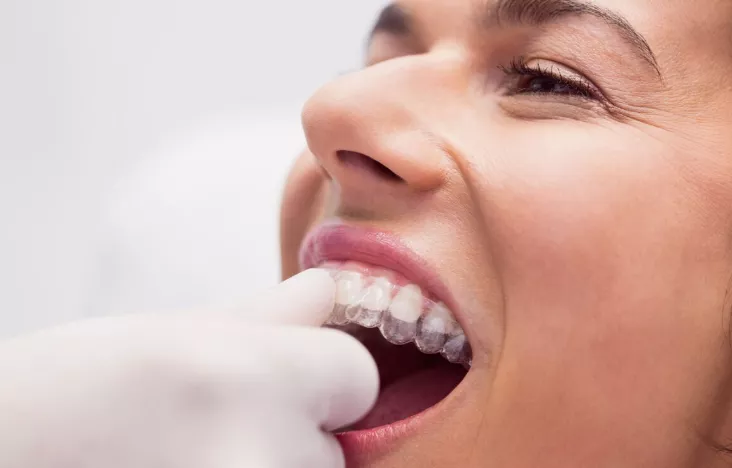
Invisalign Clear Aligner
İçindekiler Tablosu - Table of Contents
- 1 What Is Invisalign Clear Aligner Treatment?
- 2 Who Is Invisalign Suitable For?
- 3 Invisalign or Braces? Which Is Better?
- 4 How Does the Treatment Process Work?
- 5 How Long Does Invisalign Treatment Take?
- 6 How Many Hours a Day Should Invisalign Aligners Be Worn?
- 7 What Is an Attachment and When Is It Necessary?
- 8 What Is IPR (Interproximal Reduction), and Is It Necessary?
- 9 Eating, Drinking, and Smoking Rules While Using Invisalign
- 10 Invisalign Clear Aligner Treatment Prices 2026
- 11 Frequently Asked Questions
- 11.1 Is Invisalign painful, and are the first days normal?
- 11.2 What Happens If I Don’t Wear the Aligners for 1–2 Days? Will the Treatment Fail?
- 11.3 Does Invisalign affect speech, and how long does it take to adapt?
- 11.4 What Should Be Done If an Aligner Is Lost or Broken?
- 11.5 Is a Retainer Necessary After Invisalign Treatment?
- 11.6 Can Invisalign Correct Every Type of Crowding, and When Is It Not Suitable?
What Is Invisalign Clear Aligner Treatment?
Invisalign clear aligner are a digital orthodontic system that gradually straightens teeth using transparent and removable aligners. In Invisalign treatment, each aligner applies gentle and continuous force to the teeth. The aligners are custom-made for each patient. New sets are worn at specific intervals. This allows the teeth to gradually move toward the planned position.
Metal brackets and wires are not used. This provides a more aesthetic appearance. The system progresses through digital scanning and treatment planning. In some cases, small support attachments may be added. The aligners are removed while eating. After brushing, they are worn again. Success depends not only on the treatment plan but also on regular use.
Who Is Invisalign Suitable For?
Invisalign clear aligner is suitable for many children, teenagers, and adults with mild to moderate alignment issues. Invisalign can correct crowding, spacing, and certain bite problems. Deep bite and open bite cases may also be treated in suitable patients. Early treatment options are available for some children.
However, not every patient is automatically suitable. Different approaches may be required for severe skeletal problems. Results may be weaker in individuals who cannot wear the aligners regularly. For this reason, suitability is determined after examination and digital analysis. The decision depends on tooth structure, jaw relationship, and patient compliance together.
Invisalign or Braces? Which Is Better?
The answer to whether Invisalign or braces are better depends on the complexity of the case and the patient’s habits. Invisalign offers the advantage of an aesthetic appearance and removability. This makes eating and oral hygiene easier. Traditional braces, on the other hand, remain fixed in the mouth and are less dependent on patient compliance.
In some difficult tooth movements, fixed systems may provide more control. However, similar goals can be achieved with Invisalign in many cases. Which option is better varies from person to person. Aesthetic expectations, daily discipline, and case complexity should all be evaluated together. The most accurate decision should be made after a specialist examination.
How Does the Treatment Process Work?
The Invisalign treatment process begins with an examination and continues with digital planning and sequential aligner changes. In the first stage, an intraoral scan, photographs, and bite evaluation are performed. Then, a digital treatment plan is created. The sequence of tooth movements is determined. If necessary, attachments may be added or IPR may be planned.
When the first set of aligners is delivered, fit and compatibility are checked. Regular follow-up appointments then begin. New aligners are usually changed in sequence. The dentist monitors progress. If necessary, refinement aligners may be prepared. At the end of treatment, the retention phase begins. This helps preserve the achieved results.
How Long Does Invisalign Treatment Take?
Invisalign clear aligners treatment is completed within a period ranging from a few months to two years in most patients. In mild cases, the first noticeable changes may be seen within a few weeks. Some patients may begin seeing results around six months. In more complex bite problems, the duration becomes longer.
Especially in deep bite and advanced crowding cases, the treatment plan may take more time. Daily wear duration also affects treatment length. If the aligners are not worn consistently, progress slows down. Therefore, the exact duration is determined not during the first examination, but after detailed planning. In general, treatment time depends on case complexity and patient compliance.
How Many Hours a Day Should Invisalign Aligners Be Worn?
For effective results, Invisalign aligners should be worn approximately 20 to 22 hours a day. This duration is the fundamental rule of treatment. The aligners should only be removed while eating. They are also removed during brushing and flossing. It is generally safer to remove them when consuming beverages other than water.
When the required wear time decreases, the aligners may not fit the teeth properly. This can make transitioning to the next aligner more difficult. Even short but repeated interruptions may extend the total treatment time. Consistent use maintains the planned tooth movement. Phone reminders and fixed routines can help strengthen this habit.
What Is an Attachment and When Is It Necessary?
Invisalign attachments are small tooth-colored shapes that help the aligner move the teeth in a more controlled way. These small supports are temporarily bonded to the tooth surface. The aligner uses these points like handles. This makes rotations, root movements, or more difficult pulling movements easier.
Not every patient requires attachments. However, they are commonly used when more significant tooth movement is needed. Attachments are generally not very noticeable. Mild pressure may be felt at the beginning. If one falls off, there is no need to panic. Informing the clinic is sufficient. Their duration depends on the treatment plan.
What Is IPR (Interproximal Reduction), and Is It Necessary?
IPR is a procedure that creates a very small and controlled amount of space between the teeth; however, it is not necessary in every Invisalign case. This procedure may be planned to create the space needed for aligner movement. The application is performed on a millimetric level. It is not done on every tooth. It is only added when the treatment plan requires it.
In some cases, treatment can be completed without any IPR. In other cases, it may help achieve better alignment. The decision is made by the dentist. The goal is not excessive reduction, but controlled space management. In the 2026 guideline tariff, single-tooth interproximal reduction is additionally charged.
Eating, Drinking, and Smoking Rules While Using Invisalign
While using Invisalign, the aligners should be removed during meals and most beverages. Official patient guidelines recommend removing the aligners while eating and drinking. This reduces the risk of staining and deformation. Water is generally considered an exception. Hot beverages may distort the shape of the aligners.
Coffee, tea, and colored drinks may increase the risk of staining. Although there may not be a clearly written patient rule specifically about smoking, the safest approach is similar. Nicotine and smoke may increase discoloration. For this reason, it is more reasonable not to smoke while wearing the aligners. After eating, the teeth should be cleaned and the aligners reinserted. The statement regarding smoking is an inference based on staining data.
Invisalign Clear Aligner Treatment Prices 2026
Prices in 2026 vary depending on tooth structure and treatment details. Dental treatments are offered within different price ranges according to preferred materials, aesthetic expectations, and durability features.
Frequently Asked Questions
Is Invisalign painful, and are the first days normal?
Invisalign usually causes a mild feeling of pressure and tightness; this is considered normal during the first days. When a new aligner is inserted, the teeth begin to move. Therefore, slight soreness may occur. Many official patient resources state that this discomfort typically lasts one or two days.
Some individuals may experience more noticeable sensitivity during the first week. Severe pain is generally not expected. Short-term pressure may also occur after attachments are added. If the pain gradually worsens, the situation should be re-evaluated. Sharp edges, sores, or poor fit require a check-up. Pressure is normal; unbearable pain is not.
What Happens If I Don’t Wear the Aligners for 1–2 Days? Will the Treatment Fail?
Not wearing the aligners for 1–2 days may not completely ruin Invisalign treatment, but it can disrupt the treatment plan. Invisalign works with continuous and gentle force. When wear time decreases, the aligners may no longer fit properly. This can make transitioning to the next aligner more difficult. Sometimes it may be necessary to wear the same aligner longer.
In some cases, an additional check-up may be required. The outcome is not the same for every patient. However, repeated interruptions can extend treatment time. The best approach is to start wearing the aligners again as soon as possible. Then, you should inform the clinic. Skipping to another aligner on your own is not recommended.
Does Invisalign affect speech, and how long does it take to adapt?
Speech may be slightly affected at the beginning of Invisalign clear aligners treatment, but most people adapt within a short period. Minor changes may occur especially with sounds such as s, z, and sh. This happens because the tongue needs time to adapt to the new surface. Published reviews show that clear aligners can cause temporary speech changes.
The same reviews report that adaptation generally improves within a few weeks. Some people adapt sooner. For others, the process may take slightly longer. Reading aloud can help speed up adaptation. Permanent and significant speech problems are not considered normal.
What Should Be Done If an Aligner Is Lost or Broken?
If an Invisalign aligner is lost or broken, informing the clinic on the same day is the best step. Remaining without aligners may affect the planned tooth positions. Continuing with a broken aligner may also disrupt fit and progress. For this reason, you should not make decisions on your own. The dentist may sometimes ask you to return to the previous aligner.
In other situations, the current sequence may be maintained and a new aligner may be planned. There are support and replacement processes for manufacturer-related quality issues. However, the clinic’s guidance is essential for the patient. Keeping aligners in their case reduces the risk of loss. Reporting the issue quickly helps maintain treatment timing.
Is a Retainer Necessary After Invisalign Treatment?
Yes, retainers are considered necessary for most patients after Invisalign treatment. Teeth do not become completely stable immediately after treatment ends. The surrounding bone and soft tissues need time to adapt to the new positions. Therefore, the retention phase is considered part of the treatment itself. Without retainers, the teeth may shift back toward their previous positions.
Some dentists recommend longer wear during the initial phase. Later, nighttime use may be planned. The duration varies depending on the case. However, the basic principle remains the same. Retainers are necessary to preserve the achieved results. Neglecting this stage may waste the effort invested in treatment.
Can Invisalign Correct Every Type of Crowding, and When Is It Not Suitable?
Invisalign can correct many types of crowding, but it may not be the best option for every case. Official case pages include examples of crowding, spacing, open bite, deep bite, and some Class II–III cases. This demonstrates the broad capabilities of Invisalign.
However, the same official sources also state that the system is not suitable for everyone. Advanced skeletal problems, low patient compliance, or cases requiring additional procedures may be limiting factors. In some situations, extraction, attachments, IPR, or hybrid treatment plans may be required. Therefore, suitability should be determined through examination, not marketing statements. The most accurate answer is always case-specific.