
Book Appointment Now

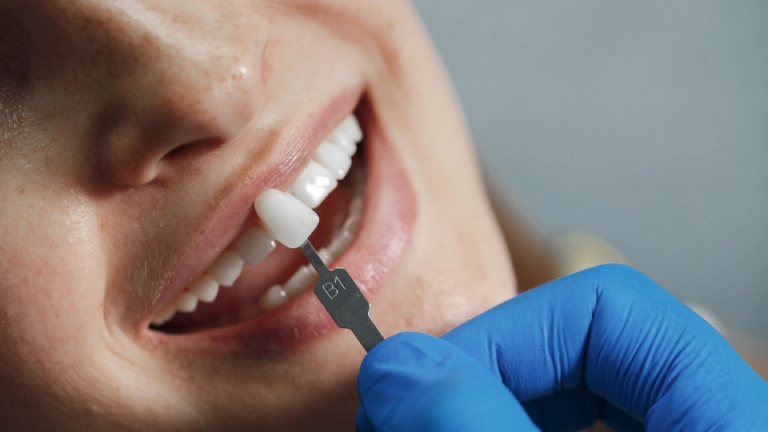
Will Zirconium Teeth Look Completely Like My Natural Teeth, or Will They Be Noticeable?
One of the first questions many people ask when considering aesthetic dental treatment is quite simple: “Will it be obvious if I get zirconium teeth?” This concern is especially understandable after seeing overly white, single-toned, large, and artificial-looking smiles online. After all, no one wants people to look directly at their teeth when they smile and think, “They’ve had dental work done.” For most patients, the real goal is to have a healthier, cleaner, more balanced smile that still looks natural.
A natural appearance is absolutely possible with zirconium dental treatment. In fact, when planned correctly, zirconium crowns can be very difficult to distinguish from natural teeth. However, there is one important point to understand: the natural result is not determined by the zirconium material alone. The dentist’s aesthetic vision, digital smile design, laboratory craftsmanship, shade selection, tooth shape, translucency, and facial harmony all directly affect the final result.
Therefore, the answer to the question “Do zirconium teeth look natural?” can be given as: “Yes, they do when performed correctly.” However, not every zirconium restoration produces the same result. Even when the same material is used, if the planning is incorrect, the teeth are not suitable for the patient’s face, or the shade selection is exaggerated, the result may look artificial.
İçindekiler Tablosu - Table of Contents
- 1 What Are Zirconium Teeth and Why Are They Preferred?
- 2 Why Do Some Zirconium Teeth Look Artificial?
- 3 Why Do Natural Teeth Look Natural?
- 4 How Successful Are New-Generation Zirconium Materials in Creating a Natural Appearance?
- 5 How Do Mamelons and Incisal Translucency Affect Natural Appearance?
- 6 What Should Be Considered for Zirconium Teeth to Look Natural?
- 7 Hollywood Smile Does Not Always Mean Extremely White Teeth
- 8 Will People Notice That I Have Zirconium Teeth?
- 9 How Does Digital Smile Design Support Natural Results?
- 10 Why Is Laboratory Craftsmanship So Important?
- 11 Properly Planned Zirconium Teeth Can Look Like Natural Teeth
What Are Zirconium Teeth and Why Are They Preferred?
Zirconium teeth are a durable and biocompatible type of crown commonly used in aesthetic dentistry. They are preferred because they can provide a more natural light reflection compared to metal-supported crowns, do not create a gray reflection around the gums, and can deliver successful results for patients with high aesthetic expectations.
Zirconium crowns have become an important option especially in front tooth aesthetics, smile design, discolored or misshapen teeth, renewal of old crowns, and certain restorations in chewing areas. New-generation high-translucency zirconium materials used today can offer much livelier and more natural-looking results compared to older zirconium systems.
In the past, when people heard the word zirconium, they sometimes thought of teeth that looked more matte, more opaque, and slightly more “crown-like.” This was because the materials used in previous years did not have the same level of light transmission as today’s advanced materials. Modern zirconium blocks, on the other hand, can imitate the way natural teeth interact with light much more successfully.
Why Do Some Zirconium Teeth Look Artificial?
The reason some zirconium teeth look artificial is usually not the material itself, but the choices made during the application and design process. A natural tooth is not made up of one flat white color. When this fact is ignored, even the highest-quality material may fail to provide the desired natural appearance in the mouth.
- Choosing an excessively white shade is one of the most common reasons zirconium teeth look artificial. Not every face shape or skin tone is compatible with very white teeth.
- Preparing the teeth in a single tone eliminates the natural color transitions found in real teeth and makes the crowns look flat.
- Lack of translucency weakens the natural appearance, especially at the tips of the front teeth.
- Tooth shapes that do not match the facial structure can make the smile look as if it does not belong to the person.
- Designs that are too thick or too large can negatively affect lip support and facial expressions.
- Failure to create surface textures may make the tooth look like a porcelain plate.
- Lack of character details during the laboratory stage can cause the restoration to move away from the appearance of a natural tooth.
At this point, the important thing is not simply to give the patient “white teeth,” but to design a smile that suits the patient’s face, age, lip structure, and character. Natural appearance is often created by the combination of small details.
Why Do Natural Teeth Look Natural?
When a natural tooth is examined closely, it becomes clear that it is not a flat white surface. There is a denser shade near the gum area. Light is refracted differently in the middle part of the tooth. A slight translucency appears at the edges. Some teeth also have fine developmental lines, subtle surface textures, and very delicate color transitions.
The human eye does not consciously notice most of these details one by one. However, it perceives the overall image. That is why restorations that do not imitate the optical properties of natural teeth can give the impression that “something has been done.” The person may not be able to explain exactly why, but they can sense an artificial appearance in the smile.
In a successful zirconium tooth design, the goal is to recreate these natural details without exaggeration. The slight transparency at the tooth edge, micro textures on the surface, color transitions, and the relationship between the teeth should all be planned carefully. When this is done properly, zirconium crowns do not look like a separate object shining inside the mouth; instead, they appear as a natural part of the face.
How Successful Are New-Generation Zirconium Materials in Creating a Natural Appearance?
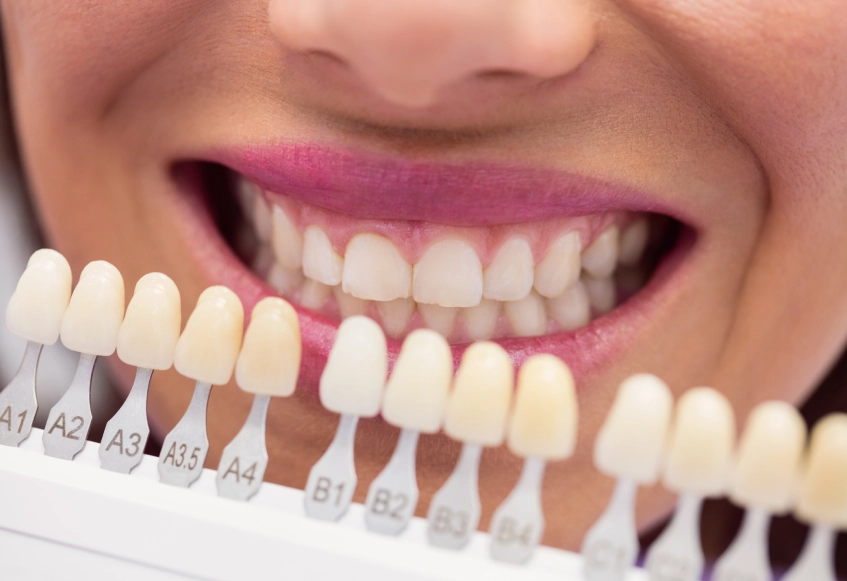
New-generation zirconium materials with high translucency offer very successful options for patients with high aesthetic expectations. Translucency can simply be thought of as light transmission. A natural tooth does not fully transmit light, but it does not completely block it either. It reflects light with a certain depth, and this is one of the features that gives the tooth vitality.
In older-generation, more opaque zirconium materials, light transmission was limited, which sometimes caused restorations to look matte and lifeless. With new-generation materials, this effect has been greatly reduced. Especially in front teeth, more natural, softer, and more realistic results can be achieved with proper case selection and the right technique.
The quality of the material is important, but so is where and for what purpose the material will be used. Every patient’s tooth color, bite, gum level, lip movement, and expectations are different. For this reason, zirconium treatment should not be considered a standard procedure, but rather a personalized aesthetic planning process.
How Do Mamelons and Incisal Translucency Affect Natural Appearance?
Natural front teeth, especially in younger individuals, may show certain developmental patterns coming from the inner structure of the tooth. These are called mamelons. Mamelons may not be prominent in every person, but when designed correctly, they can give the tooth a more lively and realistic appearance.
Incisal translucency refers to the slightly glass-like transparent effect seen at the tips of the front teeth. If this area is made completely opaque and flat, the tooth may move away from a natural appearance. If too much translucency is added, the tooth may appear gray or cold. Therefore, the translucency in the incisal area must be designed in a balanced way.
Success in aesthetic dentistry is often about achieving this balance. The tooth should neither attract excessive attention nor look dull. In a well-made zirconium restoration, shade, form, and translucency work together. The teeth continue to look natural while the patient speaks, smiles, and moves through different lighting environments.
What Should Be Considered for Zirconium Teeth to Look Natural?
For zirconium teeth not to be noticeable from the outside, the treatment should not be viewed merely as a technical crown procedure. A successful result requires aesthetic planning, measurement accuracy, laboratory quality, and patient expectations to be evaluated together.
- Shade selection should be made by considering the patient’s skin tone, eye color, natural tooth shade, and age.
- Tooth shape should be compatible with the face shape and lip structure.
- The smile line should be planned according to the patient’s lip movements while speaking and smiling.
- The light transmission of the zirconium material should be selected according to the area where it will be applied.
- Mamelons, incisal translucency, and micro surface textures should be created in a way that supports the character of natural teeth.
- Digital impression and digital design processes should be used to reduce the margin of error.
- Personalized characterization should be performed during the laboratory stage.
- Gum harmony and bite relationship should be carefully checked.
When these steps are performed correctly, zirconium teeth can provide more comfortable results not only aesthetically but also functionally. The patient can achieve a smile that is compatible with their own teeth, suits their face, and looks beautiful without attracting unwanted attention in daily life.
Hollywood Smile Does Not Always Mean Extremely White Teeth
The concept of a Hollywood Smile has been used in aesthetic dentistry for many years. However, this concept is often misunderstood by the public. Many people think of overly white, large, and immediately noticeable teeth when they hear the term Hollywood Smile. In reality, a well-planned Hollywood Smile does not always mean choosing the whitest possible teeth.
True aesthetics means making the person’s face look more balanced and more attractive. For one patient, a brighter white shade may look excellent, while for another patient, a few shades closer to natural may create a much more successful result. This is because dental aesthetics are not planned by looking at the teeth alone. The entire face, lip shape, smile width, gum visibility, and personal style should all be evaluated together.
The most successful aesthetic restorations are often the ones that are not noticed at first glance. Instead of saying, “You had your teeth done,” people may say, “You look better,” “Your face looks brighter,” or “Your smile looks beautiful.” That is the real goal.
Will People Notice That I Have Zirconium Teeth?
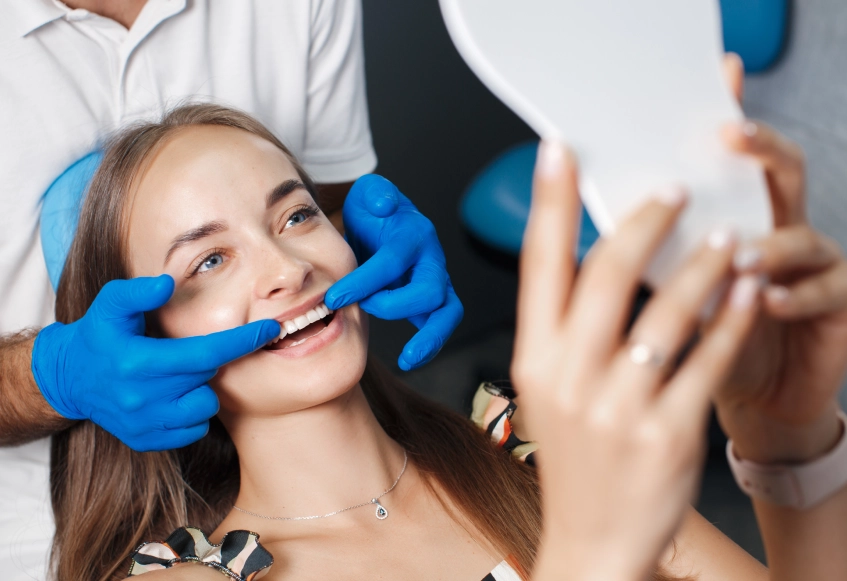
With high-quality planning and skilled laboratory work, people do not necessarily have to notice that you have zirconium teeth. Especially when the shade selection is natural, the tooth forms are planned in harmony with the face, and light transmission is adjusted correctly, the result can look highly realistic.
The patient’s expectations are also important here. Some patients want a more striking, brighter, and whiter smile. In such cases, the result may go slightly beyond natural limits. Other patients prefer that no one understands they have had any dental work done. In that case, softer color transitions, more natural tooth forms, and personalized character details become more important.
At Dr. Tansu Uzel Dental Clinic, the main approach in aesthetic dental treatments is to create a natural, balanced smile that is in harmony with the patient’s face. Located in the Beyoğlu and Galata area of Istanbul, the clinic aims to achieve natural-looking zirconium dental results through digital impression technologies, personalized design principles, and premium laboratory craftsmanship.
How Does Digital Smile Design Support Natural Results?
Digital smile design allows not only the teeth but the entire face to be evaluated before treatment. A personalized plan is created by considering the patient’s photographs, intraoral records, lip movements, and smile line. This process helps prevent the “same tooth shape for everyone” approach.
While some details in traditional methods depend more heavily on experience and visual assessment, digital technologies make this planning process more measurable. Digital impressions taken with intraoral scanners may reduce some of the margin of error that can occur with conventional impression methods. This contributes to a restoration that fits the tooth, gums, and bite more accurately.
A natural appearance is not only about the color of the crown. The position of the tooth in the mouth, its relationship with the lips, how it appears while speaking, and how it complements the facial expression during smiling are also important. Digital design helps plan all these details in a more controlled way.
Why Is Laboratory Craftsmanship So Important?
In zirconium dental treatment, laboratory craftsmanship is just as important as the dentist’s planning. This is because the character of a natural tooth is often created through small details added during the laboratory stage. Color transitions, surface textures, mamelon effects, incisal translucency, and light reflections are all part of this process.
A standard, single-colored zirconium crown without character details may look flat in the mouth. In a personalized restoration, however, the tooth’s length, width, corner transitions, surface texture, and color depth are all evaluated individually. This helps the final result look more natural.
For this reason, when getting zirconium teeth, it is not enough to ask only, “Which material is being used?” Questions such as which planning system is used, how the laboratory works, whether the restoration is prepared specifically for the patient, and how color and form details are determined are just as important as the material itself.
Properly Planned Zirconium Teeth Can Look Like Natural Teeth
In modern aesthetic dentistry, zirconium teeth do not have to be noticeable from the outside. With the right shade selection, new-generation zirconium materials with high light transmission, digital smile design, mamelon details, incisal translucency, micro surface textures, and personalized form planning, zirconium crowns can look highly compatible with natural teeth.
An artificial appearance is usually not caused by zirconium itself, but by incorrect shade selection, uniform design, insufficient characterization, or tooth forms that are not in harmony with the face. Therefore, the purpose of aesthetic dental treatment should not simply be to create white teeth. The real goal should be to create a smile that suits the person’s face, harmonizes with facial expressions, and looks natural in daily life.
At Dr. Tansu Uzel Dental Clinic, located in Istanbul Beyoğlu and Galata, the main approach in zirconium teeth and digital smile design treatments is to achieve natural-looking results that do not make it obvious the patient has had dental work done. Because in a well-executed aesthetic dental treatment, people usually focus not on the teeth themselves, but on the person’s healthier, younger, and more confident expression.