
Book Appointment Now

What is Composite Bonding (Composite Veneers)? Is an Aesthetic Smile Possible Without Tooth Cutting?
Composite bonding is one of the most frequently preferred cosmetic dentistry treatments in recent years for patients who want to improve their smile while preserving as much natural tooth structure as possible. Also known as composite veneers, this method is a minimally invasive treatment that can be considered particularly for people who do not want excessive tooth reduction, dislike overly white and identical-looking teeth, and prefer a more natural smile. The goal is not simply to make the teeth look straighter or more even. Ensuring that the teeth are in harmony with the face, lips, and the person’s natural expression is one of the most important parts of the treatment.
At Dr. Tansu Üzel Beyoğlu Galata Dental Clinic, composite bonding planning begins with a detailed assessment of the existing tooth structure. Digital records of the teeth are obtained using 3D intraoral scans, while tooth length, width, existing gaps, smile line, lip support, and facial proportions are evaluated together. Instead of applying a standard tooth shape to every patient, the aim is to create a design that suits the person’s face and preserves the natural character of their teeth.
İçindekiler Tablosu - Table of Contents
- 1 Premium Composite Bonding and Composite Veneer Treatments in Galata – Beyoğlu, Istanbul
- 2 What Is Composite Bonding?
- 3 Are Teeth Shaved for Bonding?
- 4 Is the Procedure Painful?
- 5 How Long Does Composite Bonding Take?
- 6 Composite Bonding or Emax Veneers?
- 7 Can Tea, Coffee, and Smoking Stain Bonding?
- 8 Can Composite Bonding Be Repaired If It Breaks?
- 9 Can I Return to My Original Teeth?
- 10 How Long Does Composite Bonding Last?
- 11 Should Teeth Whitening Be Done Before Bonding?
- 12 Can I Bite Hard Foods?
- 13 For International Patients
- 14 Why Is Digital Smile Design Important?
- 15 Premium Materials and Precise Aesthetic Craftsmanship
- 16 Premium Composite Bonding in Galata – Beyoğlu, Istanbul
Premium Composite Bonding and Composite Veneer Treatments in Galata – Beyoğlu, Istanbul
The expectations of patients seeking cosmetic dental treatment in Istanbul are now very different compared with the past. Previously, very white, visibly treated, and perfectly symmetrical teeth were often preferred. Today, a natural appearance has become much more important. A significant number of patients visiting our clinic in the Beyoğlu and Galata area want to achieve a more balanced smile without making it obvious that dental work has been performed. For this reason, composite bonding focuses on preserving natural tooth anatomy rather than making every tooth look exactly the same.
At Dr. Tansu Üzel Beyoğlu Galata Dental Clinic, cosmetic dentistry treatments are carried out with digital planning and modern clinical equipment. During treatment, not only the front surfaces of the teeth but also the bite relationship and the contact points between the teeth are evaluated. A restoration that looks attractive should also be easy to clean, allow proper flossing, and remain comfortable during daily function.
What Is Composite Bonding?
Composite bonding is a cosmetic dental treatment in which highly aesthetic composite resin materials are applied directly to the tooth surface to reshape the tooth. The material is added in layers, then shaped according to natural tooth anatomy and polished. This method makes it possible to achieve a more balanced tooth shape while preserving a significant amount of the existing natural tooth structure. It is particularly useful in the front teeth for correcting small shape differences and minor symmetry problems.
Composite bonding is most commonly preferred in the following situations:
- Closing small or moderate gaps between teeth
- Reshaping chipped or worn front teeth
- Creating a more balanced tooth length
- Camouflaging mild tooth misalignment
- Correcting differences in tooth shape and symmetry
- Creating a more harmonious smile line
At our clinic, highly aesthetic composite systems such as GC and Tokuyama are used for composite treatments. Combining layers with different levels of opacity and translucency helps create an appearance closer to natural tooth enamel instead of a flat, single-color result.
Are Teeth Shaved for Bonding?
One of the most common questions among patients considering composite bonding is whether the teeth need to be shaved during the procedure. In most cases, extensive tooth reduction similar to traditional crown treatments is not required. If the existing position and shape of the teeth are suitable, bonding may be performed with surface preparation alone and without removing tooth structure. This makes it an important option for people who want to preserve their natural teeth.
However, it would not be accurate to say that the tooth is never touched in every case. Some patients may have very tight contact points between teeth, outward-projecting areas, or small irregularities that affect the bite. In such situations, extremely limited contour adjustments may be performed to protect both aesthetics and function. At Dr. Tansu Üzel Beyoğlu Galata Dental Clinic, the main approach is to avoid removing more tooth structure than necessary.
Is the Procedure Painful?
Composite bonding is generally not a painful procedure. Because the treatment usually does not reach the living tissues inside the tooth and does not involve extensive preparation, local anesthesia is not required in most cases. Patients can usually relax during the procedure and speak comfortably during breaks. Treatment is particularly comfortable when composite material is simply added to the tooth surface.
There is also no recovery period similar to that required after surgical procedures. Most patients can return to their daily routine on the same day. A temporary sensation of getting used to the new tooth shape may occur during the first few hours, but this usually disappears quickly. If any discomfort is felt during biting, small contour adjustments can be made.
How Long Does Composite Bonding Take?
The duration of composite bonding depends on the number of teeth being treated and the extent of the planned cosmetic changes. Repairing a small chip on a single tooth or closing a limited gap between two teeth may take approximately 30-60 minutes. Smile designs involving several front teeth usually require more time. In suitable cases, a smile design may be completed in a single session lasting approximately 2-4 hours.
The ability to complete treatment in a single session is one of the important advantages of composite bonding, especially for patients visiting Istanbul for a short stay or traveling from abroad. However, every patient’s needs are different. If there are old fillings, bite problems, or other treatments that need to be completed beforehand, the total treatment plan may change accordingly.
Composite Bonding or Emax Veneers?
There is no single correct choice between composite bonding and Emax veneers. When deciding which treatment is more suitable, the current condition of the teeth, the patient’s cosmetic expectations, bite characteristics, and long-term habits should all be evaluated together.
- Composite bonding usually requires less intervention to the natural tooth structure and can be applied directly in the clinic.
- Composite restorations can often be repaired locally in cases of small chips or wear.
- Emax laminate veneers are prepared in a laboratory and offer greater resistance to external staining due to their ceramic structure.
- Emax veneers may provide an advantage in terms of long-term color stability in suitable cases.
- Bonding can often be completed in a single session, while Emax treatment requires a different process because of the laboratory stage.
- The most appropriate choice should be made individually after digital analysis and a clinical examination.
Can Tea, Coffee, and Smoking Stain Bonding?
Composite materials do not have the same level of stain resistance as porcelain. For this reason, heavy tea and coffee consumption, smoking, and strongly colored foods may cause external staining on the bonding surface over time. However, the quality of the composite is only one factor. The quality of the final polishing procedure is also important. A smooth and well-polished surface can help reduce the attachment of external pigments.
With regular oral care and check-up appointments, the aesthetic appearance of composite bonding restorations can be maintained for a long time. During approximately six-month check-ups, professional polishing can be performed when necessary to restore surface shine. For this reason, continuing regular maintenance after bonding treatment plays an important role in preserving the results.
Can Composite Bonding Be Repaired If It Breaks?
Yes, one of the most practical advantages of composite bonding restorations is that they can be repaired. If a small corner chip or localized wear occurs, the entire restoration usually does not need to be removed. The affected area can be prepared, new composite material can be added to the existing restoration, and the surface can be reshaped.
It is also important to determine why the fracture occurred. If habits such as teeth grinding, clenching, nail biting, chewing on pens, or repeatedly biting very hard foods with the front teeth continue, the restoration may become damaged again. Therefore, identifying the factor that caused the fracture is just as important as repairing the damaged area for long-term use.
Can I Return to My Original Teeth?
In many composite bonding cases where the natural tooth structure has been preserved, the restoration can be carefully removed to reach the underlying natural tooth surface again. This characteristic makes bonding one of the more conservative options in cosmetic dentistry.
However, the extent to which the treatment can be reversed depends on the intervention performed at the beginning of treatment. If certain areas of the tooth have been reduced to change its shape, it may not be possible to return exactly to the original anatomy. For this reason, patients should be clearly informed during the initial planning stage about how much natural tooth structure, if any, will be adjusted.
How Long Does Composite Bonding Last?
There is no exact lifespan that applies to every composite bonding restoration. Although an average range of 4-8 years may be mentioned, the main factors affecting durability are the patient’s daily habits and oral conditions. In people who maintain good oral hygiene, avoid biting hard objects with their teeth, and attend regular dental check-ups, the aesthetic appearance of the restorations may be maintained for longer.
Patients who grind or clench their teeth may place more force than normal on the front teeth. For these patients, using a night guard can help protect composite bonding restorations. Regular polishing and minor contour adjustments can also help support the longevity of the restorations.
Should Teeth Whitening Be Done Before Bonding?
If a lighter shade than the patient’s current natural tooth color is desired, teeth whitening is generally recommended before composite bonding. This is because composite material does not respond to whitening treatment in the same way as natural teeth. If bonding is completed first and the natural teeth are whitened afterward, a color difference may develop between the natural tooth and the composite material.
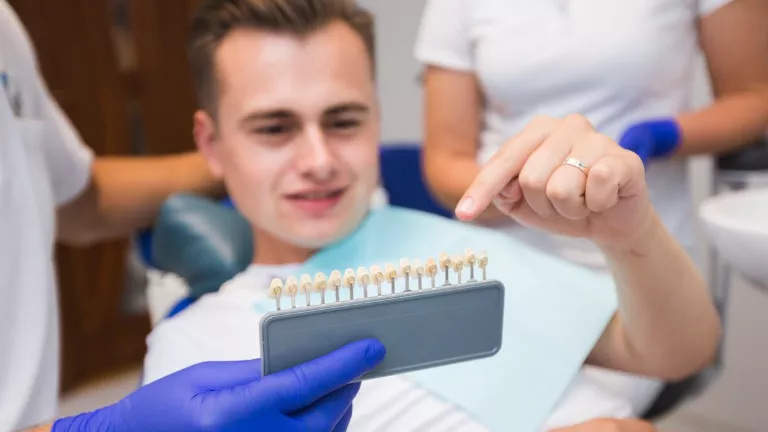
For this reason, the desired tooth shade is determined at the planning stage. After whitening, approximately 1-2 weeks may be allowed for the tooth color to stabilize. The shade of the composite bonding material can then be selected according to the new tooth color to create a more consistent appearance.
Can I Bite Hard Foods?
Normal eating can continue after composite bonding, but unnecessary force should not be applied to the front teeth. Biting directly into hard foods such as apples or carrots, opening shells or packages with the teeth, or chewing extremely hard materials such as ice may increase the risk of damaging the restorations.
These habits are not recommended for natural teeth either. Cutting hard foods into smaller pieces and regularly using a recommended night guard, particularly in patients with teeth grinding or clenching problems, can help the restorations remain healthy for longer.
For International Patients
One of the most common questions among patients who travel to Istanbul for composite bonding is how many days they need to stay in the city. In suitable cases, treatment may be completed within 1-2 days. Because the procedure is non-surgical, most patients can continue their normal daily activities on the same day, and there is generally no special waiting period required before flying.
If a small chip or minor adjustment is needed after the patient returns home, the repairable nature of composite materials offers an additional advantage. Aesthetic composite systems are widely used around the world, so when a minor correction is required, the patient can be evaluated by an experienced dentist in their own country.
Why Is Digital Smile Design Important?
Successful composite bonding does not involve evaluating only the color or front surface shape of the teeth. The amount of tooth visible while smiling, lip movement, the facial midline, the proportions between the teeth, and the bite relationship can all directly affect the final result. For this reason, cosmetic planning should be completed in as much detail as possible before treatment begins.
At Dr. Tansu Üzel Beyoğlu Galata Dental Clinic, high-precision digital records are obtained using the iTero Lumina intraoral scanner. With 3D scans, the existing position of the teeth can be examined in detail in a digital environment. Digital data helps identify small asymmetries that may be difficult to detect through visual examination alone, while also supporting the creation of a more predictable and patient-specific cosmetic treatment plan.
Premium Materials and Precise Aesthetic Craftsmanship
The quality of the material used in composite bonding directly affects the aesthetic result. A natural tooth is not a single color. Light passes through different areas of the tooth in different ways, and enamel creates a noticeable sense of depth, especially in the front teeth. For this reason, simply using composite material in the correct shade is not enough. Different levels of translucency need to be placed in the appropriate areas, the edges must be shaped naturally, and the surface texture must be carefully created.
At Dr. Tansu Üzel Beyoğlu Galata Dental Clinic, highly aesthetic composite systems such as Tokuyama and GC are used. High-precision equipment, including SteriSharp microsurgical blades, may also be used when detailed contouring is required during treatment. Detailed work performed under high magnification helps provide greater control when shaping surface transitions and contact points between the teeth.
Premium Composite Bonding in Galata – Beyoğlu, Istanbul
A natural-looking smile design does not mean applying the same tooth shape to every person. Softer and more rounded contours may look natural on some faces, while more defined tooth anatomy may better suit the facial features of others. For this reason, the first stage of composite bonding treatment is to understand the person’s face and smile correctly before making any changes to the existing teeth.
At Dr. Tansu Üzel Beyoğlu Galata Dental Clinic, the goal is not to create a standard smile that immediately appears to have been cosmetically treated, but to achieve a balanced result that looks as though it naturally belongs to the patient’s face. Digital analysis, a minimally invasive approach focused on preserving natural tooth structure, premium composite materials, and detailed aesthetic craftsmanship are evaluated together. Particularly for patients who want to avoid the overly white and artificial-looking “Turkey Teeth” appearance, composite bonding may be considered as an option for achieving a natural-looking smile when clinically appropriate.