
Book Appointment Now

Orthognathic Surgery in Istanbul: Functional and Aesthetic Jaw Correction with Dr. Tansu Uzel
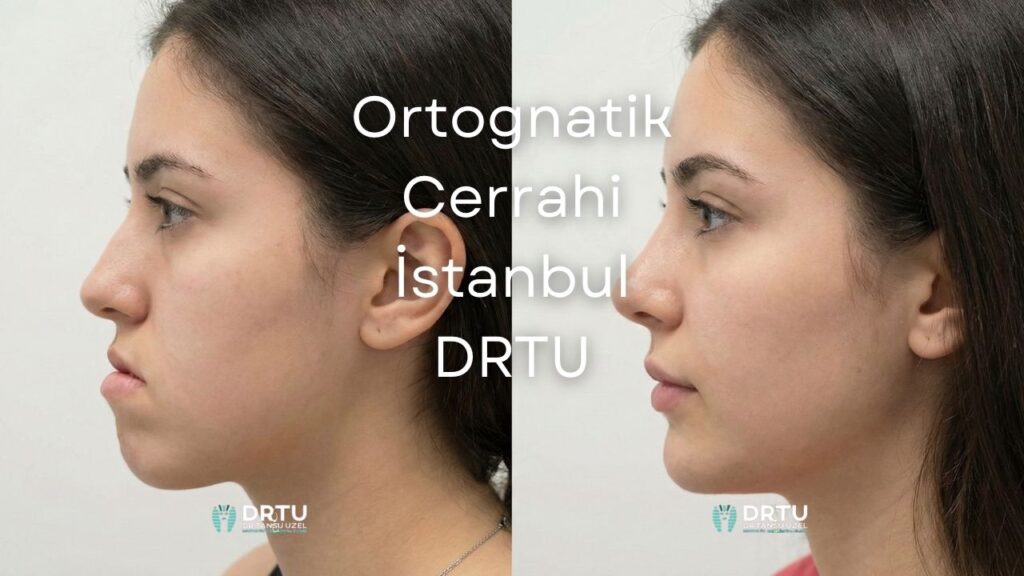
Jaw discrepancies are not purely aesthetic concerns — they are serious functional conditions that directly affect speech, chewing, breathing and even sleep quality. At Dr. Tansu Uzel Clinic orthognathic surgery in Istanbul is performed by specialist Oral, Dental and Maxillofacial Surgeon Dr. Tansu Uzel, who corrects skeletal facial imbalances using modern surgical techniques to deliver both a transformed facial aesthetic and a measurably improved quality of life.
Istanbul is one of the world’s foremost destinations for orthognathic surgery. International patients choose Istanbul for the combination of highly specialised surgical expertise, advanced three-dimensional planning technology and treatment costs that are a fraction of those in Western Europe or North America — with no compromise in clinical standards, materials or safety protocols.
What Is Orthognathic Surgery? Who Is It For?
Orthognathic surgery is the surgical repositioning of the upper jaw (maxilla), the lower jaw (mandible), or both, to correct skeletal discrepancies that cannot be resolved through orthodontic treatment alone. It addresses the underlying bone structure — not merely the position of the teeth.
Orthognathic surgery is indicated in the following conditions:
- Lower jaw retrusion or protrusion: The so-called “Class II” and “Class III” bite relationships, where the lower jaw sits too far back or too far forward relative to the upper jaw.
- Upper jaw deficiency or retrusion: A sunken or flat appearance in the midface region.
- Open bite: The front teeth do not make contact when the mouth is closed.
- Facial asymmetry: The jaw is visibly deviated to one side.
- Gummy smile: Excessive gum display when smiling, caused by vertical maxillary excess.
- Obstructive sleep apnoea: Airway narrowing caused by jaw position, particularly lower jaw retrusion.
Orthodontics vs. Orthognathic Surgery: Understanding the Difference
A very common question from patients is: “Can braces alone fix this?” The answer depends entirely on whether the problem is dental (the position of the teeth) or skeletal (the position of the jaw bones themselves). The following comparison clarifies the distinction:
| Feature | Orthodontics only (Braces) | Orthognathic Surgery + Orthodontics |
| Domain | Only the alignment of the teeth. | Both the teeth and the jawbone structure. |
| Yüz Estetiği | It changes the profile to a limited extent. | It dramatically and aesthetically alters the jawline and facial contours. |
| Function | Resolves minor closure issues. | It resolves chewing and breathing problems at their root. |
| Duration of Treatment | 1 – 2.5 years | Preparation process + Surgery + Final orthodontics. |
| Durability | Teeth may return to their original position over time. | Skeletal changes are permanent. |
If a patient’s problem is skeletal in origin, orthodontics can only mask it — and often at the cost of compromising tooth position. Orthognathic surgery is the only definitive treatment for true skeletal discrepancies.
Why Dr. Tansu Uzel? The Surgical Specialist Difference
Orthognathic surgery is performed in one of the most anatomically complex regions of the body — in close proximity to facial nerves, major blood vessels and the airway. It is therefore essential that the operating surgeon is a qualified Oral, Dental and Maxillofacial Surgeon, not a general dentist or orthodontist.
3D virtual surgical planning: Prior to every procedure, Dr. Tansu Uzel performs digital simulations on the patient’s CT scan data, calculating movements to the millimetre and previewing the outcome before a single incision is made. This level of pre-operative planning is the foundation of predictable, safe results.
Minimally invasive technique: Surgical experience directly reduces intraoperative tissue trauma — which in turn means less post-operative swelling, a faster recovery and a more comfortable healing process for the patient.
Aesthetic judgment: Beyond correcting function, Dr. Tansu Uzel designs each surgical plan with the golden ratio principles of facial harmony in mind. The goal is not only a jaw that works correctly, but a face that looks balanced, proportionate and natural.
The Orthognathic Surgery Process: A Step-by-Step Guide
Step 1 — Pre-Surgical Orthodontic Preparation
In most cases, orthodontic treatment is required before surgery to align the teeth to their correct positions within each jaw independently — so that when the jaws are repositioned surgically, the bite comes together correctly. This phase typically takes 6 to 12 months.
Step 2 — Surgery
The operation is performed under general anaesthesia in a fully equipped hospital setting.
- Incision location: The entire procedure is performed from inside the mouth. There are no external incisions and no visible scarring on the face.
- Procedure: The jaw bones are repositioned according to the pre-planned digital design and secured in their new position using titanium micro-plates and screws.
- Duration: Single-jaw surgery takes approximately 2 hours. Double-jaw (bimaxillary) surgery takes approximately 4 hours.
Step 3 — Recovery
Patients are typically discharged after 1 to 2 nights in hospital. A liquid diet is followed during the first week. The majority of swelling resolves within 2 to 3 weeks, though the final settling of the facial contours takes up to 6 months as soft tissues adapt to their new skeletal foundation. Most patients return to normal daily activity within 2 to 3 weeks of surgery.
Step 4 — Post-Surgical Orthodontics
Following surgery, a further period of approximately 6 months of orthodontic treatment is typically required to complete the fine detailing of the bite and achieve the final occlusal result.
Frequently Asked Questions
Will I feel pain during surgery? You will be under general anaesthesia throughout the procedure and will not feel anything. Post-operatively, the predominant sensation is tightness and swelling in the cheeks and jaw area rather than acute pain — which is managed effectively with prescribed medication.
Are there visible scars after jaw surgery? No. Dr. Tansu Uzel performs the entire surgical procedure through intraoral incisions. There are no cuts made to the external face, and no visible scarring of any kind.
How long does the full treatment take? The complete process — from the beginning of pre-surgical orthodontics through to the completion of post-surgical orthodontic finishing — typically spans 18 to 30 months in total, depending on the complexity of the case. The surgical procedure itself is a single event within that timeline.
How much does orthognathic surgery cost in Istanbul? The cost depends on whether single or double-jaw surgery is required, the choice of hospital facility, and the materials used. Istanbul offers orthognathic surgery at costs dramatically below those in Western Europe, the United Kingdom or the United States — for comparable or superior clinical outcomes. A detailed surgical plan and personalised cost estimate is provided following clinical and 3D radiological assessment. Remote consultations are available for international patients to initiate the process before travelling.
Istanbul: An Internationally Certified Centre for Jaw Surgery
Dr. Tansu Uzel holds an International Health Tourism Competency Certificate issued by the Turkish Ministry of Health — an official government accreditation confirming that our clinic meets the highest standards for international patient safety, quality management and cross-border healthcare. This is a formal certification that DRTU Clinic is equipped and authorised to receive patients travelling from abroad for surgical treatment.
Patients have travelled to our Istanbul clinic for orthognathic surgery from across Europe, the United Kingdom, the Gulf states, Central Asia, North Africa and beyond. Before and after documentation from real international orthognathic surgery patients is available on our Instagram profile at @drtudentalclinic.
For international patients, the consultation and planning process can begin remotely. Sending us existing CT scans, photographs and orthodontic records allows Dr. Tansu Uzel to provide an initial clinical assessment and treatment proposal before you travel — so that your time in Istanbul is used entirely for treatment, not investigation.
Contact & Appointment
- WhatsApp / Phone: +90 532 386 23 78
- Instagram: @drtudentalclinic.eng — surgical results, international patient testimonials
- Address: Galata, Müeyyetzade, Tatar Beyi Sk. No:26/B, 34425 Istanbul, Turkey