
Book Appointment Now

Gum Problems and Wound Healing in Diabetic Patients: What Should You Pay Attention To?
Diabetes is not just a condition that affects blood sugar levels; it also has significant effects on oral and dental health. Gum diseases and the healing process of oral wounds, in particular, require a more delicate balance in diabetic individuals. Small changes made in daily life can play a major role in protecting the gums and accelerating the healing of oral wounds.
In this article, we discuss why gum problems are more common in diabetic patients, why wound healing is slower, and what to pay attention to in daily life—with scientifically grounded and practical recommendations.
İçindekiler Tablosu - Table of Contents
- 1 Effects of Diabetes on Oral and Dental Health
- 2 Why Are Gum Problems More Common in Diabetic Patients?
- 3 Why Is Wound Healing Slower in Diabetic Patients?
- 4 What Should Be Considered in Daily Life?
- 5 The Effect of Diabetes Medications on Gum Enlargement
- 6 Diabetes and Oral Health: Two Concepts That Cannot Be Separated
Effects of Diabetes on Oral and Dental Health
High blood sugar levels create a suitable environment for bacteria to multiply in the mouth. This directly affects:
- Gum inflammation
- Dry mouth
- Increased susceptibility to infections
- Delayed wound healing
Diabetic individuals have a higher risk of developing periodontitis (advanced gum disease) compared to non-diabetic individuals. Additionally, diabetes can cause existing gum disease to progress more rapidly.
Why Are Gum Problems More Common in Diabetic Patients?
1. Weakened Immune System
When blood sugar is uncontrolled, the immune system weakens and the body’s defense against bacteria decreases, making gum inflammation more likely.
2. Dry Mouth (Xerostomia)
Diabetes can affect salivary gland function and cause dry mouth. Dry mouth:
- Increases the rate of tooth decay
- Worsens gum problems
- Raises the risk of infection
3. Poor Blood Circulation
Diabetes negatively affects vascular health. Reduced blood flow to the gums lowers the tissue’s ability to regenerate.
4. Increased Inflammatory Response
Inflammation levels in the body are higher in diabetic individuals. This makes gum tissue more prone to damage and delays healing.
Why Is Wound Healing Slower in Diabetic Patients?
Wound healing in diabetic patients—both inside the mouth and in other areas of the body—takes longer. The main reasons are:
- Reduced immune response
- Insufficient blood supply
- Unnoticed trauma due to nerve damage (neuropathy)
- Blood sugar fluctuations slowing cellular regeneration
For example, after a tooth extraction, the healing period may be longer in diabetic patients, or even a simple cheek bite may heal more slowly than usual.
What Should Be Considered in Daily Life?
The steps diabetic individuals can take to protect their oral and dental health are simple but extremely effective.
1. Blood Sugar Control Is the Foundation
The more stable the blood sugar:
- The fewer gum problems occur
- The faster wound healing becomes
- The lower the risk of dry mouth and infections
Small adjustments in daily life (regular water intake, carbohydrate management, regular exercise) directly improve oral health.
2. Do Not Neglect Oral Hygiene
Oral care routines should never be skipped by diabetic patients.
- Brushing teeth at least twice a day
- Daily use of dental floss
- Antibacterial or dentist-recommended mouth rinses
- Tongue cleaning
Tip: Patients with dry mouth may use oral moisturizing gels, saliva-stimulating sprays, or sugar-free gum.
3. Routine Dental Check-Ups
Diabetic patients should visit the dentist at least 2–3 times a year. Early diagnosis prevents future infections and the need for surgical procedures.
In clinical experience, diabetic patients with regular follow-up show slower progression of periodontitis.
4. Pay Attention to Oral Wounds
Oral wounds are sometimes overlooked in daily life. However, in diabetic patients:
- Biting trauma
- Cheek irritation
- Denture pressure sores
- Irritation from hard foods
can turn into more serious issues.
Warning: Any wound in the mouth lasting longer than 7–10 days should never be ignored.
5. Fluid Intake and Eating Habits
To prevent dry mouth:
- Drink water frequently throughout the day
- Reduce excessive caffeine consumption
- Avoid very salty and packaged foods
- Eat plenty of fresh fruits and vegetables
Eating patterns that cause sudden blood sugar spikes worsen gum problems and slow healing.
6. Smoking Must Be Stopped
Smoking is one of the biggest triggers of gum disease in diabetic patients. It disrupts blood circulation and further delays healing. Quitting smoking—with professional support if needed—significantly improves oral health.
7. Blood Sugar Monitoring Before Surgical Procedures
Before tooth extraction, implant surgery, or any oral surgical procedure:
- Blood glucose levels must be checked
- The dentist must be informed about diabetes status and medications
- Blood sugar should be stabilized before treatment if necessary
These steps greatly reduce the risk of infection and delayed healing.
The Effect of Diabetes Medications on Gum Enlargement
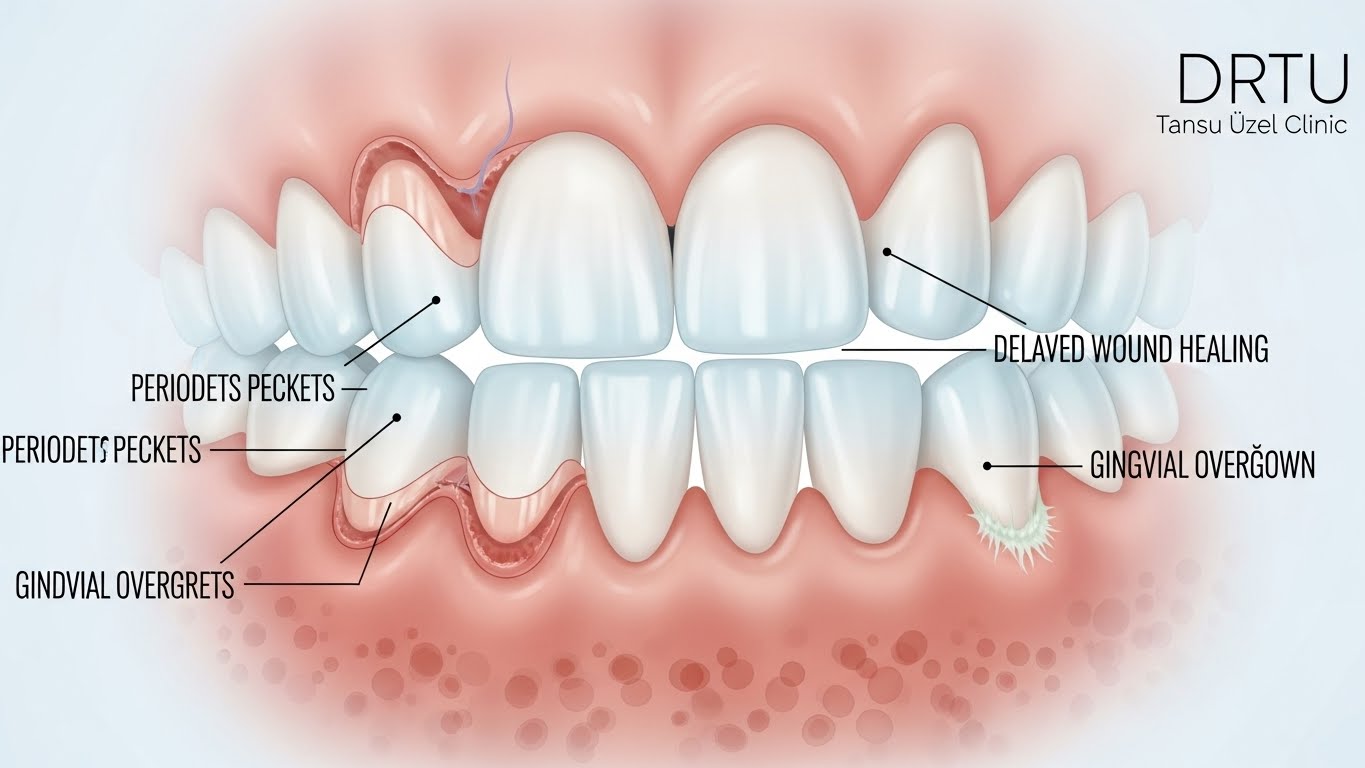
Some systemic medications used in diabetes management can cause gum overgrowth (gingival hyperplasia). Gum enlargement can lead to deeper periodontal pockets between the teeth and gums, allowing bacteria to accumulate more easily and worsening existing gum disease.
Pockets caused by gum enlargement may lead to:
- Faster plaque and tartar buildup
- Increased gum bleeding
- Easier inflammation of periodontal tissues
- Bad breath and increased sensitivity
- Progression to advanced periodontitis, which may result in tooth loss
This issue is more prominent in diabetic patients because both the immune system and tissue healing are already compromised. Therefore, if gum enlargement is noticed, it must be evaluated by a dentist, and if necessary, medication adjustments should be made in collaboration with an endocrinologist.
Diabetes and Oral Health: Two Concepts That Cannot Be Separated
Gum diseases and wound healing in diabetic patients require more sensitive monitoring. However, with regular oral care, controlled nutrition, blood sugar management, and routine dental check-ups, these risks can be significantly reduced.
Small changes in daily habits—such as drinking more water, establishing a proper brushing routine, avoiding hard foods, and regularly visiting the dentist—make a huge difference in preserving oral health.
For questions about oral and dental health in diabetic patients, you can contact Dr. Tansu Uzel Clinic for professional support and create a personalized oral care plan.
If you would like to see examples of our treatments, you can follow us on Instagram.