
Book Appointment Now

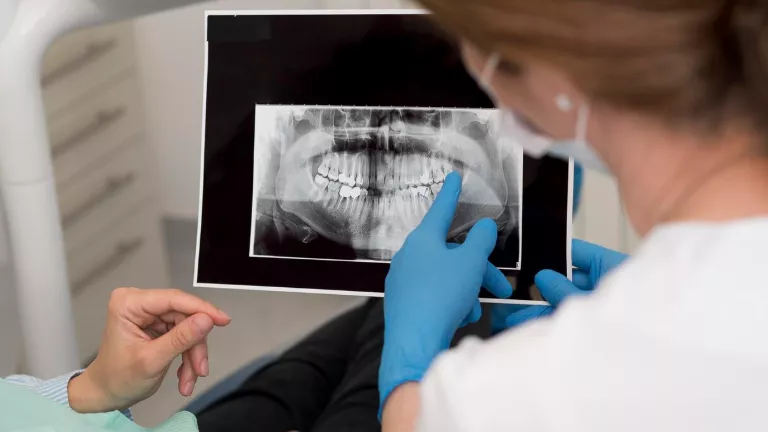
What is Quad Zygoma (Four Zygomatic Implant) Treatment? One of the most powerful ways to regain fixed teeth in cases of advanced bone loss.
Quad Zygoma treatment is one of the most specialized implant applications developed for patients with advanced upper jaw bone loss. It offers a strong option for regaining fixed teeth, especially for individuals who have used removable dentures for years, do not have enough bone for conventional implants, or have not achieved successful results from previous bone augmentation procedures. Bone loss in the upper jaw can affect not only chewing comfort over time but also speech, facial aesthetics, and the person’s social life. Therefore, when planning treatment, not only missing teeth but also the patient’s quality of life should be evaluated together. Today, thanks to advanced surgical planning, three-dimensional imaging, and modern protocols applied by experienced surgeons, much more successful results can now be achieved in many cases that were once considered “not suitable for implants.”
When a person remains toothless for a long time or uses removable dentures for many years, serious volume loss may occur in the upper jaw bone. In this case, the bone support required for standard implants becomes insufficient. This is exactly where the Quad Zygoma approach stands out. In this treatment, implants are not fixed only to the jawbone as in conventional methods, but to the zygomatic bone, also known as the cheekbone, which is a much denser and stronger anatomical structure. This may allow long and demanding stages such as bone grafting to be avoided in some patients with advanced bone loss.
Quad Zygoma cases planned at our clinic in the Beyoğlu and Galata area of Istanbul are evaluated by oral and maxillofacial surgeons experienced in advanced implant surgery. Operations are performed under general anesthesia in contracted private hospitals, with patient safety and comfort kept at the forefront. This allows the surgical process to proceed in a more controlled manner while providing the patient with a comfortable experience during the procedure.
İçindekiler Tablosu - Table of Contents
What Is Quad Zygoma?
Quad Zygoma is an advanced implant treatment developed for patients with severe bone loss in the upper jaw. The term “Quad” refers to the use of a total of four zygomatic implants. These implants are placed as two on the right side and two on the left side to create a fixed prosthetic foundation in the upper jaw.
In conventional implant treatment, implants are placed directly into the jawbone, known as the alveolar bone. However, in some patients, this area may be so thin or resorbed that standard implants cannot be applied safely. Zygomatic implants, on the other hand, are longer in structure and extend into the cheekbone to provide strong retention. The dense structure of the cheekbone offers an important advantage in terms of primary stability. For this reason, Quad Zygoma treatment has become a notable solution, especially for patients whose treatment options seem limited due to advanced bone loss.
One of the most important aspects of this method is that it does not view treatment merely as “implant placement.” In fact, the aim is to rebuild a fixed dental system that is functionally strong, aesthetically balanced, and compatible with the patient’s daily life. Increased chewing strength, restored speech comfort, and reduced self-confidence problems caused by removable dentures are among the most noticeable effects of the treatment on patients.
Who Is Quad Zygoma Treatment Suitable For?
Quad Zygoma treatment is not a routine implant procedure applied to every patient. It requires advanced surgical experience, accurate case selection, and detailed planning. It is generally considered for the following patient groups:
- Quad Zygoma may be a strong alternative for patients with a completely toothless upper jaw who have been seeking fixed dental treatment for a long time. It can offer a more comfortable rehabilitation plan, especially for individuals who do not want to use removable dentures.
- In patients with advanced bone resorption in the upper jaw, Quad Zygoma treatment may come to the forefront when standard implant placement does not seem possible. In such cases, although bone volume may be insufficient, zygomatic bone support can be decisive for treatment.
- For individuals who have previously tried implant treatment but experienced unsuccessful results, the existing anatomical structure can be reassessed and a different surgical approach may be planned. Quad Zygoma can represent a new opportunity, especially for patients who have experienced repeated failures.
- This treatment is highly valuable for patients who do not want bone grafting or who have become tired of previous grafting processes. In some cases, the need for additional bone augmentation procedures may be reduced.
- Quad Zygoma may also offer a more direct solution for patients who want to avoid additional surgical procedures such as sinus lifting. This can make the treatment process more controlled and, in some cases, shorter.
- This method may be preferred after detailed evaluation in patients who want to regain fixed teeth in a shorter time and whose general health condition is suitable for surgery.
Of course, the final decision is not made only through clinical examination. Three-dimensional dental tomography, evaluation of facial anatomy, assessment of sinus structure, and the patient’s general medical history should be considered together. A successful Quad Zygoma treatment is directly related not only to where the implant is placed, but also to how accurately the planning is performed.
How Is Quad Zygoma Surgery Performed?
Quad Zygoma surgery is a procedure that requires advanced surgical knowledge and experience. For this reason, the planning stage is just as important as the operation itself. Before treatment, the patient undergoes an intraoral examination, three-dimensional tomography images are examined in detail, and the angles and pathways through which the implants will be placed are digitally determined. This planning process is extremely critical both for anatomical safety and for the success of the prosthesis to be prepared afterward.
The operation is performed under general anesthesia in contracted private hospitals, with patient safety and comfort taken into consideration. The main reason for choosing general anesthesia is that the procedure is comprehensive and the aim is to keep the patient completely comfortable during surgery. The surgeon places the long zygomatic implants into the cheekbone at special angles in line with the previously created digital plan. Correct positioning of all four implants plays a decisive role in the durability of the fixed prosthetic foundation.
The key point here is that Quad Zygoma treatment should not be considered an ordinary implant procedure. This is because upper jaw anatomy, sinus cavities, soft tissue balance, and prosthetic planning must all be evaluated at the same time. Experienced teams therefore handle the surgical and prosthetic process together. In some patients, temporary fixed teeth may also be applied in the same session. This approach provides significant relief both psychologically and functionally, especially for patients who have used removable dentures for many years.
What Are the Advantages of Quad Zygoma Treatment?
The reason Quad Zygoma treatment stands out in patients with advanced upper jaw bone loss is not only that it makes implant treatment possible. It also makes the treatment process more practical and more manageable. The main advantages are as follows:
- Its ability to reduce the need for bone grafting is one of the most remarkable aspects of the treatment. Especially in patients with severe bone loss, the need for hip bone grafting or advanced augmentation procedures may be eliminated in some cases.
- The possibility of planning the treatment process in a shorter period provides great comfort for patients. Instead of months-long bone formation processes, a more direct rehabilitation opportunity may be achieved.
- High primary stability can be achieved thanks to the dense structure of the zygomatic bone. This contributes to strong implant retention and allows fixed restoration planning to proceed more safely.
- It offers the possibility of fixed teeth for patients who do not want to use removable dentures. Reducing the concern of moving dentures in daily life creates a noticeable difference in the patient’s quality of life.
- It supports the recovery of chewing function and speech comfort. For patients who are dissatisfied with upper jaw dentures, this change often represents an improvement that directly affects daily life.
- It may contribute to restoring facial support. Facial features that appear collapsed due to tooth loss and bone resorption may gain a more balanced appearance with a properly planned fixed rehabilitation.
However, it should be remembered that every advantage becomes meaningful only with correct case selection. Quad Zygoma is a powerful option, but its true success emerges when it is planned specifically for the patient.
Recovery Process After Quad Zygoma
The recovery process after Quad Zygoma may vary depending on the scope of the surgery, the patient’s general health condition, tissue healing capacity, and the prosthetic protocol applied. However, mild to moderate swelling, edema, and occasionally bruising are generally expected in the first few days. These symptoms can usually be controlled, and the patient can experience a more comfortable recovery process with the medications and care protocol recommended by the doctor.
Cold application, rest, compliance with the recommended nutrition plan, and careful oral hygiene are very important in the first days. Patients can usually return to their daily lives gradually within a few days. However, the surgical area must be protected, hard foods should be avoided, and follow-up appointments should not be missed. Recovery should be evaluated not only by tissue closure but also by the biological adaptation of the implants and the smooth progression of prosthetic planning.
While temporary fixed teeth may be applied shortly in some patients, the permanent prosthesis process may be carried out more gradually in other cases. What matters here is not speed, but achieving a long-lasting and balanced result. Most patients state that as healing is completed, they experience a much more comfortable use compared to removable dentures. Especially the movement of dentures while speaking, the feeling of insecurity while chewing, and social anxiety can be significantly reduced thanks to fixed restoration.
Quad Zygoma Treatment in Istanbul Beyoğlu
At our clinic in the Beyoğlu and Galata area of Istanbul, Quad Zygoma treatment is planned through detailed analyses for patients with advanced bone loss. Not every patient is evaluated with the same template. This is because upper jaw anatomy, sinus structure, bone density, soft tissue quality, and patient expectations vary from person to person. Therefore, the treatment process requires more comprehensive preparation than a standard implant procedure.
At our clinic, a detailed examination and three-dimensional tomography evaluation are performed first. Then surgical suitability, implant positions, and prosthetic planning are considered together. Operations are carried out under general anesthesia in contracted private hospitals with modern surgical equipment. This approach both increases patient comfort and provides the controlled environment required for advanced surgical cases.
Many patients apply thinking that they can no longer have fixed teeth due to advanced bone resorption. However, when a correct evaluation is made, Quad Zygoma treatment can be an extremely strong alternative for these patients. It may open a new door, especially for individuals who have used removable dentures for years, are concerned about bone grafting processes, or have not achieved results from previous treatments. The main goal here is not only to place implants, but to help the patient smile confidently again, speak comfortably, and eat with ease.
Frequently Asked Questions
Is Quad Zygoma a painful procedure?
Since Quad Zygoma surgery is performed under general anesthesia, the patient does not feel pain during the procedure. After the operation, as with any surgical procedure, mild to moderate sensitivity, a feeling of pressure, or swelling may occur. This process is largely controlled with the medications and care instructions recommended by the surgeon. Most patients state that after spending the first days carefully, they experience a more comfortable recovery than expected.
Is bone grafting required for Quad Zygoma?
One of the most important features of Quad Zygoma treatment is that it can reduce the need for bone grafting in many cases. This is because the implants attach not to the severely resorbed upper jawbone, but to the zygomatic bone, which has a denser structure. Still, every patient is different. Additional procedures may be required in certain anatomical situations. Therefore, the final decision can only be made after tomography examination, clinical evaluation, and surgical planning.
Is Quad Zygoma safe?
When the right patient selection is made, detailed digital planning is used, and the procedure is performed by experienced oral and maxillofacial surgeons, Quad Zygoma is a treatment method that has been used safely for many years. The most critical point is knowing that this treatment requires advanced surgical experience. Careful evaluation of the patient’s anatomy, proper planning of surgical limits, and correct management of the prosthetic process form the foundation of safety. Therefore, the choice of center and the experience of the team are of great importance.
How long does the treatment take?
The duration of Quad Zygoma treatment varies depending on the patient’s anatomical structure, the scope of the operation, whether temporary fixed teeth will be applied in the same session, and the subsequent prosthetic plan. While the process may progress faster in some patients, a more controlled schedule may be required in other cases. What matters here is not only how many hours the procedure takes, but that all stages of the treatment proceed within a solid plan. Clear information about duration can only be provided after clinical evaluation and tomography analysis.