
Book Appointment Now

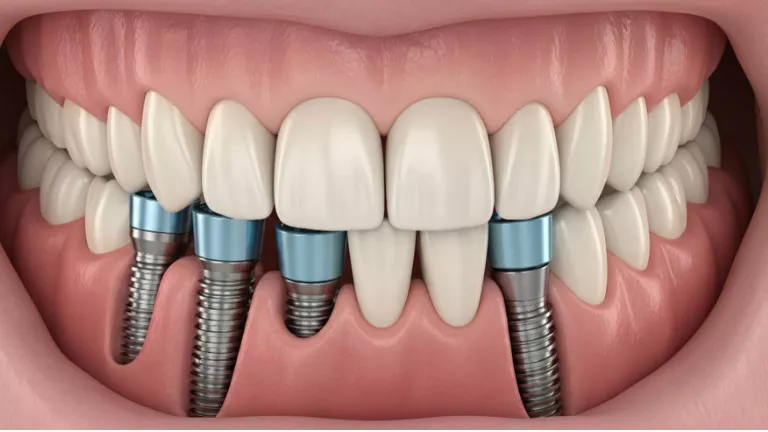
Anterior Implant Treatments in Beyoğlu and Galata: Why Experience, Planning, and Patience Are So Important?
Anterior region implant treatments in Beyoğlu and Galata are among the most sensitive areas of aesthetic dentistry. The most important point patients researching anterior region implant treatments in Beyoğlu and Galata should know is that this procedure is not limited to placing an implant in the area of a missing tooth. The anterior region is the most visible part of the smile, and every procedure performed here directly affects gum symmetry, lip support, facial aesthetics, speech, light reflection, and long-term bone stability.
For this reason, anterior region implant treatments should be evaluated differently from standard implant surgeries. While function is more prominent in the posterior region, both function and aesthetics are planned together in the anterior region. Osseointegration of the implant alone is not sufficient; the gum tissue around the implant must look natural, the emergence profile of the prosthesis must imitate a real tooth, and the result must preserve its aesthetic integrity years later.
For patients considering anterior region implant treatment in Istanbul, Beyoğlu, and Galata, the right decision is not choosing the place that performs the fastest procedure, but choosing the team that plans the treatment holistically from biological, surgical, and aesthetic perspectives.
İçindekiler Tablosu - Table of Contents
- 1 Why Is Surgical Technique So Important When Placing Implants in the Anterior Region?
- 2 Why Are Very Thick Implants Not Preferred in the Anterior Region?
- 3 Why Is Midline and Symmetry Planning So Important?
- 4 Gum Aesthetics Is as Important as the Tooth Itself
- 5 Why May Hard Tissue Grafting Be Necessary?
- 6 Why Are Soft Tissue and Connective Tissue So Important?
- 7 Why Does Bone Healing Take Time?
- 8 Can Early Loading Be Performed on Every Patient with Implants?
- 9 Why Can Patients Misinterpret the Length of the Treatment Period?
- 10 Why Can Incorrect Planning in Anterior Region Implants Cause Serious Problems?
- 11 Why Are Material Selection and Aesthetic Crowns Important?
- 12 Why Is the Physician-Patient Trust Relationship So Important in Anterior Region Implant Treatments?
- 13 Why Is Experience So Important in Anterior Region Implant Treatments?
Why Is Surgical Technique So Important When Placing Implants in the Anterior Region?
In anterior region implant treatments, surgical technique is one of the most important stages that determines the outcome of the treatment. This is because the anterior maxilla, meaning the front area of the upper jaw, has a structure that is more prone to bone loss over time, especially on the outer surface. Placing the implant too far forward, toward the vestibular side, may not seem to cause a problem at first; however, over the years, serious problems such as gum recession, metal reflection, aesthetic deterioration, and loss of bone support may occur.
For this reason, in anterior region implant surgery, implant planning should be based not only on the current bone structure, but also on the expected bone behavior of the patient in the following years.
- The position of the implant should be compatible with the natural emergence profile of the tooth.
- Sufficient bone thickness should be preserved on the front surface.
- The implant should not be placed excessively toward the vestibular side.
- Gum support and soft tissue thickness should be evaluated together.
- The risk of possible future bone resorption should be taken into account.
Experience becomes especially important at this point in anterior region implant treatments. Because even if placing the implant is technically possible, bone or gum tissue may sometimes need to be prepared first for long-term aesthetic success. An implant placed in a hurry may look good in the first months; however, if the correct biological foundation has not been created, aesthetic losses may occur in the following years.
Why Are Very Thick Implants Not Preferred in the Anterior Region?
The implant diameter used in the anterior region is one of the most critical parts of the aesthetic result. Natural tooth roots in the central and lateral tooth areas have specific anatomical widths. When implants that are thicker than necessary are placed in these areas, the teeth may appear too close to each other, the gum triangles called papillae may disappear, and the prosthetic emergence profile may move away from a natural appearance.
The purpose of anterior region implant treatments is not only to fill the gap. The goal is to ensure that the implant cannot be distinguished in the patient’s smile. For this, implant diameter, distance from neighboring teeth, bone thickness, gum biotype, and the form of the future crown should be planned together. A very thick implant may seem surgically strong, but it can disrupt gum architecture in the aesthetic region.
For this reason, millimetric calculations should be made when planning anterior region implant treatments in Beyoğlu and Galata. The diameter, angle, and depth of the implant should be determined in a way that allows the prosthesis to look like a natural tooth.
Why Is Midline and Symmetry Planning So Important?
The anterior region is the area where the human eye notices symmetry most quickly. Especially in central teeth, the harmony of the midline with the face, the size proportions of the right and left teeth, gum levels, and the relationship with the lip line directly affect the aesthetic result. Therefore, in anterior region implant treatments, it is not enough for the implant to be placed in the bone; the face, lips, teeth, and gums should be evaluated together.
Even a small deviation in the midline, a slight disproportion in tooth lengths, or a millimetric difference in gum level can stand out in the patient’s smile. For this reason, tissue shaping with temporary teeth, gum adjustments, or connective tissue support may be required in anterior region implant treatments.
In some cases, even if the implant can be placed immediately, preparing gum symmetry first may be more appropriate for the aesthetic result. This approach may extend the treatment slightly; however, in a highly visible area such as the anterior region, patient planning is far more valuable than a quick result.
Gum Aesthetics Is as Important as the Tooth Itself
One of the most commonly overlooked issues in anterior region implant treatments is gum aesthetics. However, no matter how naturally an implant-supported crown is made, if the surrounding gum tissue is not healthy and symmetrical, the result may look artificial. For a natural smile, gum margins are as important as the color, form, and light transmission of the tooth.
Gum levels, papilla height, soft tissue thickness, and right-left symmetry are inseparable parts of the treatment plan in anterior region implants. Patients with a thin gum biotype may have a higher risk of recession in the following years. Therefore, connective tissue grafting, gum thickening procedures, or soft tissue adjustments may be required in some patients.
When evaluating anterior region implant treatments in Beyoğlu and Galata, patients should pay attention not only to the implant brand or procedure duration, but also to how gum architecture will be protected. This is because long-term natural appearance depends on the health of the surrounding tissues as much as the implant itself.
Why May Hard Tissue Grafting Be Necessary?
Some patients may not have sufficient bone volume to place an implant in the anterior region. Waiting a long time after tooth extraction, trauma, infection, bone resorption, or a thin biotype may reduce bone volume. In such cases, placing the implant directly may create aesthetic and biological problems in the future.
Hard tissue grafting is performed to create a stronger and more stable bone foundation around the implant. Cortical bones taken from the ramus region, particulate bone grafts, or advanced augmentation techniques can increase both horizontal and vertical bone support in the anterior region. In some cases, approaches similar to the Khoury technique may provide a more controlled foundation, especially in severe bone loss.
These procedures may extend the treatment period; however, the aim in anterior region implant treatments is not only to place the implant, but to create the biological foundation that allows the implant to remain healthy and aesthetic for years. Therefore, in patients with bone deficiency, grafting is not an unnecessary extension of treatment, but one of the fundamental steps of long-term success.
Why Are Soft Tissue and Connective Tissue So Important?
In anterior region implant treatments, soft tissue is as decisive as bone. In patients who do not have sufficient attached gum tissue or who have a thin gum biotype, the implant area may be more sensitive in the long term. This can lead to problems such as gum recession, aesthetic deterioration, and difficulty in maintenance.
Connective tissue grafts, free gingival grafts, and soft tissue thickening procedures may be preferred to create a healthier and more stable gum structure around the implant. However, the biological healing process must be respected in these procedures. Soft tissues take time to mature, and in most cases, a healing period of several weeks is required for the treatment to proceed safely.
Clinically, in some situations, treatment can continue in a controlled manner within 4 to 6 weeks; however, full biological maturation of the soft tissue may take longer. For this reason, patience is at least as important as surgical skill in anterior region implant treatments.
Why Does Bone Healing Take Time?
One of the topics patients wonder about most is why implant treatment does not finish immediately. Although an implant may look like a mechanical part placed inside the bone, the success of the treatment depends entirely on biological healing. Especially in cases involving bone grafting, hard tissue augmentation, sinus lifting, or anterior region reconstructions, time is needed for the bone to mature.
Bone healing often requires a biological process of several months. In some cases, earlier stages may be started in a controlled way due to social or functional needs; however, the decision should be made according to the patient’s bone quality, implant stability, graft condition, and the physician’s clinical evaluation.
Accelerating the treatment more than necessary can be risky, especially in the anterior region. Aggressive loading before the bone has fully matured may cause gum recession, bone loss, or peri-implant problems. For this reason, when planning anterior region implant treatments in Beyoğlu and Galata, the treatment duration should be evaluated not only according to the calendar, but according to biological healing.
Can Early Loading Be Performed on Every Patient with Implants?
Early loading means placing a temporary tooth shortly after implant placement in suitable cases. Especially in anterior region aesthetics, this approach may seem attractive because it prevents the patient from remaining toothless. However, early loading is not suitable for every patient.
The most important factors determining this decision are the primary stability of the implant, bone quality, chewing forces, occlusion control, and soft tissue condition. In patients with sufficient bone volume, high implant stability, and controlled bite forces, early temporary teeth may contribute to the shaping of soft tissue. However, if the bone is weak, grafting has been performed, or bite control is risky, early loading may jeopardize long-term success.
The correct approach in anterior region implant treatments is not to apply the same protocol to every patient, but to make a decision according to the patient’s biological conditions. A fast solution may sometimes be possible; however, it may not always be the safest solution.
Why Can Patients Misinterpret the Length of the Treatment Period?
Today, patients can access a great deal of information about implant treatments through the internet, social media, and various digital sources. However, most of this information consists of general explanations and does not reflect each patient’s individual condition. A statement such as “implant treatment is completed in 3 months” does not mean that the same duration applies to all patients.
Anterior region implant treatments especially require personalized planning. The patient’s bone volume, gum biotype, smile line, healing capacity, systemic diseases, and aesthetic expectations directly affect the treatment duration. Sometimes, even if it is technically possible to proceed faster, waiting may be more appropriate to preserve the long-term aesthetic result.
Experienced physicians often choose not the shortest route the patient wants, but the healthiest route in the long term. This may mean more sessions, more follow-up, and sometimes additional surgical stages. However, in an area with high aesthetic risk such as the anterior region, proceeding patiently is one of the most important factors that increases treatment quality.
Why Can Incorrect Planning in Anterior Region Implants Cause Serious Problems?
Incorrect planning in anterior region implant treatments may cause problems that are difficult to correct later. In the posterior region, a small aesthetic flaw may often go unnoticed; however, in the anterior region, gum recession, asymmetry, or an artificial appearance directly affects the patient’s smile.
The following problems may occur as a result of incorrect planning:
- Gum recession and exposure of the implant surface
- Metal reflection or gray discoloration
- Loss of papillae and formation of black spaces between the teeth
- Asymmetrical gum levels
- Artificial and unnatural emergence profile
- Bone loss and long-term stability problems
- Complex complications that may require removal of the implant
After an implant is placed, reversing the procedure is not always easy. Removing an incorrectly positioned implant may cause more bone loss, new graft operations, and a longer treatment process. For this reason, the most accurate approach in anterior region implant treatments is not to finish the procedure quickly, but to plan it correctly from the beginning.
Why Are Material Selection and Aesthetic Crowns Important?
In anterior region implant treatments, prosthetic planning is as important as surgery. Even if the implant is in the correct position, the material, color, form, and light transmission of the crown placed on it determine the natural appearance. Glass ceramics, new-generation aesthetic zirconia systems, and zirconia-based crowns can provide successful results depending on case selection.
Especially in the anterior region, light refraction should be close to that of a natural tooth. A crown that is too opaque or incorrectly shaped will not harmonize with the gum tissue and neighboring teeth. In long bridges, not only aesthetics but also durability should be considered. Therefore, material selection should be made according to the patient’s bite forces, number of missing teeth, aesthetic expectations, and existing tooth structure.
For patients who want to have anterior region implant treatments in Beyoğlu and Galata, a good result is possible when surgery and prosthetics are considered within the same plan. The position of the implant, the tissue shaping process with temporary teeth, and the design of the final crown are not independent of each other.
Why Is the Physician-Patient Trust Relationship So Important in Anterior Region Implant Treatments?
Anterior region implant treatments are a process that requires the patient to be patient and to trust the physician’s clinical foresight. This is because not every patient has the same bone structure, the same gum thickness, or the same healing capacity. General information read on the internet often does not fully reflect the real clinical picture.
Experienced physicians make decisions not only based on theoretical knowledge, but also through different cases, complications, and healing processes they have observed over the years. Sometimes additional grafting, waiting periods, or soft tissue procedures recommended to the patient may seem to prolong the treatment at first glance. However, these steps are planned for long-term aesthetic and biological success.
For this reason, patient-physician trust is an important part of the treatment. When the patient understands why waiting is necessary, why an additional procedure is recommended, and why a fast solution is not always the right solution, the process progresses much more healthily.
Why Is Experience So Important in Anterior Region Implant Treatments?
Anterior region implant treatments are multidisciplinary procedures that require surgical knowledge, aesthetic analysis, occlusion evaluation, gum management, bone biology, prosthetic planning, and long-term foresight. Therefore, treatment success cannot be measured only by the implant brand or how quickly the procedure is performed.
Patients researching anterior region implant treatments in Beyoğlu and Galata should prefer experienced teams that aim for long-term biological and aesthetic success instead of making decisions based on price or speed. Because true success in the anterior region is not merely creating a tooth that looks beautiful today. The real success is ensuring that the implant continues to look healthy, natural, symmetrical, and stable years later.